A small team moves fast if the Shopify theme allows it
Shopify is rebuilding its theme layer so machines can read it. A readable Shopify theme is worth more to a two-person store than a large one, but only under one condition.
In this piece
Your Shopify theme decides how fast your team can change the store. Two people can ship a change this afternoon that used to take a sprint, but only if the theme was built to be read.
Some two-person stores can do that. Many can't.
The difference isn't budget and it isn't talent. It's structural.
What actually changed
Two changes landed in the last year and both are easy to miss.
In December 2025, Shopify opened AI block generation to every theme in the Theme Store. You describe a block in plain language and it gets written.
Then on 21 July 2026, Shopify announced a developer preview of 2 new Liquid tags, {% block %} and {% partial %}. The reason they gave is the part worth reading twice. The change is there, in their words, so that “developers and coding agents can read and edit everything in one place.”
Shopify is restructuring its templating language so machines can follow it.
That matters more to a small store than a large one. A large team already has people who can read the theme. You don't, and now you might not need to.
The condition nobody mentions
A machine can only change what it can understand.
So can a contractor you've never met. So can whoever replaces your marketing hire next year.
That reads as obvious written down. It isn't obvious when you're picking a theme, or telling a developer to just make it look like the mockup.
So here's the condition that rarely gets attached to the good news. A theme your team can't read gets you very little of this.
What makes a Shopify theme easy to change?
4 traits. You can check all 4 this afternoon, and none of them need you to read code.
- Sections named for what they do. A section called
product-herotells you where the buy box lives. One calledsection-7tells you to go ask someone. Names are the index. - Values that live in settings. Your price, your badge text, your guarantee copy. If those sit in the theme editor, anyone can change them. If they're written into the code, every edit is a ticket.
- Content in fields, not baked into pictures. A price burned into a hero JPG can't be updated, translated or tested, and can't be read by anything. It goes stale the day you change your pricing, and it goes stale silently.
- One source for every number. Your star rating, your bundle value, your per-serving price. When each lives in one place, changing it is 1 job. Typed into 4 sections by hand, it's 4 jobs and you'll miss one.
That last one is also the fastest thing to check from the outside, which is part of why I built the free Findability Check the way I did.
None of this is advanced. It's the difference between a store you can steer and a store you can only file requests against.
The test worth running today
Open your theme editor. Pick one real change you'd want to make this month. Not a redesign. Something small and specific, like swapping a guarantee line or reordering two sections.
Try to do it yourself.
What happens next is your actual ceiling. Either you change it in a minute, or you find the thing isn't editable, or you can't work out where it lives at all.
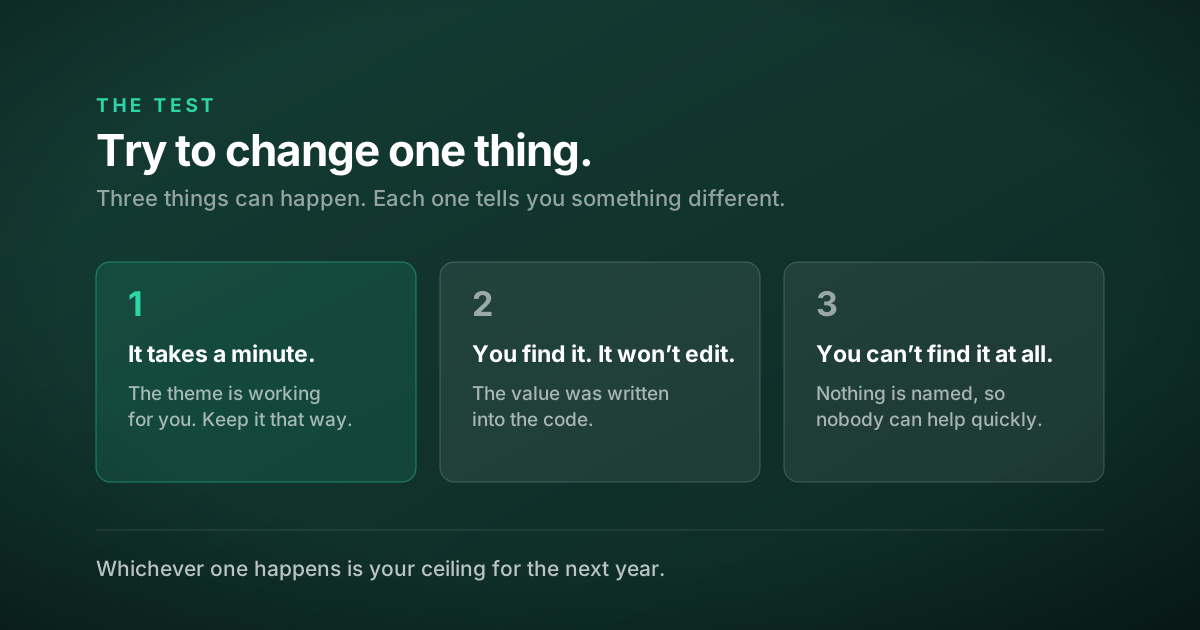
That result tells you more about what your store can do next year than any theme feature list will.
What this looks like on a real store
I've been doing this work for a long time, across a lot of stores. One recent engagement shows the pattern cleanly.
At gammalighttherapy.com I came in for content and SEO. I ended up in the theme, because the things I was asked to fix kept turning out to be theme problems wearing content clothes. A page that couldn't rank because the structure was wrong. Copy nobody could change without a developer. A layout making the argument in the wrong order.
You can't fix any of that from the outside.
So I pulled the theme into a local repo, connected Claude Code to it so it could read the whole thing at once, and started making the changes properly. shopify theme check runs before anything ships.
That engagement moved from content strategy into fractional UX engineering. Custom sections, template work, product pages, with the content and search side still mine. It isn't the first time a project has gone that way, and it usually goes that way for the same reason.
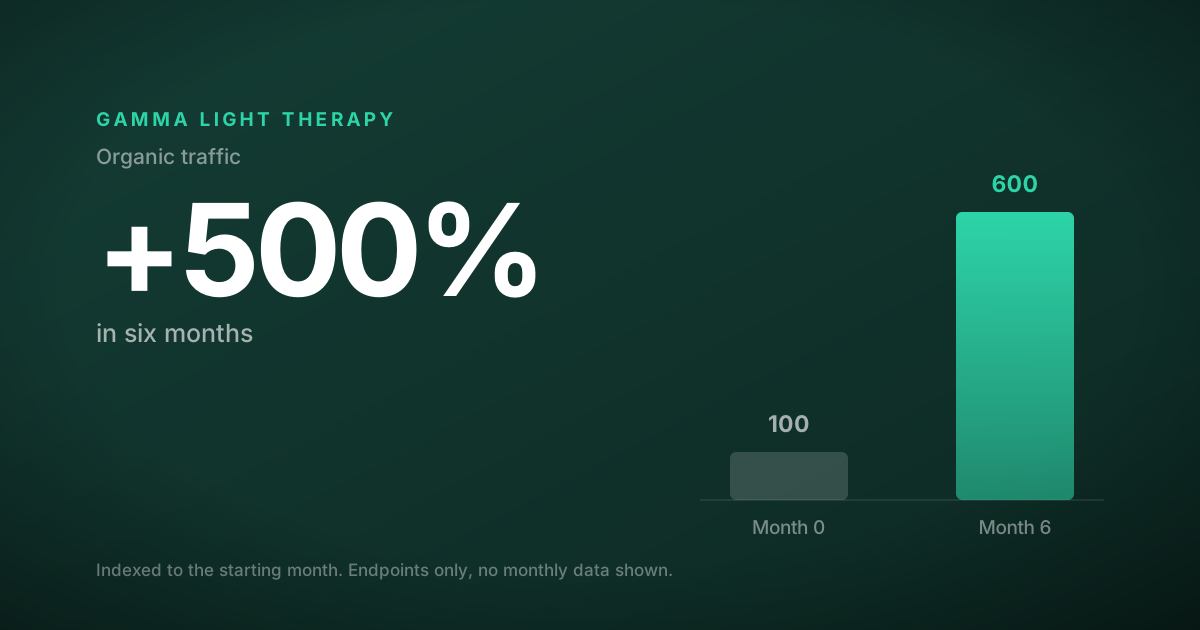
That is the part worth taking from it. Content strategy hits a ceiling the moment the page stops being editable, and most of the time nobody names the ceiling. They just conclude the content didn't work.
Here's the part that matters to you rather than to me.
The agent is only as useful as the theme is readable. On a cleanly sectioned theme it finds what you're describing, because the section is named for what it does and the values sit in settings. On a theme where the layout is assembled somewhere you can't see, it can't help you. Neither can the next person you hire.
The tooling didn't make the theme workable. The theme being workable is what let one person cover that much ground.
Do you need a bigger team, or a better theme?
The instinct, when your store moves too slowly, is that you need more people.
Sometimes that's right. Often what you actually need is a store that lets two people move.
And when you do bring someone in, the brief is different from the one most people write. Most briefs describe a finished page. A better brief describes a finished page and who has to be able to change it afterwards without calling you.
That single sentence changes what gets built. It's the difference between paying once and paying every time.
Sure, some of this is work you can't do yourself, and there's rarely a version where you never need a developer. But the gap between “I need help with this” and “I need help with everything” is mostly a structural decision somebody made before you got here.
One question
Go and try to change one thing on your product page this week.
What did you find, and how long did it take you?
Questions people ask
What makes a Shopify theme easy to change?
Four traits. Sections named for what they do, so anyone can find the right one. Values that live in theme settings rather than in code, so an edit is not a developer ticket. Content in fields rather than baked into images, so it can be updated, translated and tested. And one source for every number, so changing a price or a rating is one job rather than four.
How do I tell whether my Shopify theme is holding me back?
Open your theme editor and try to make one small, real change you actually want this month, like swapping a guarantee line or reordering two sections. Either it takes a minute, or the thing turns out not to be editable, or you cannot work out where it lives. That result is your ceiling, and it tells you more than any theme feature list.
Can AI tools edit a Shopify theme for me?
Partly, and the limit is structural rather than technical. In December 2025 Shopify opened AI block generation to every Theme Store theme, and in July 2026 it previewed new Liquid block and partial tags so that, in Shopify’s own words, developers and coding agents can read and edit everything in one place. An agent can only change what it can understand, so a well structured theme gets far more out of those tools than a messy one.
Do I need a bigger team or a better Shopify theme?
Often the theme. If small changes need a developer every time, the constraint is structural rather than a staffing gap. When you do hire, brief for editability as well as for a finished page, and say who has to be able to change it afterwards without calling you.